Lila Elyse 2026

Tea Steam, Streetlight, and the Quiet Middle: Notes on My Life As It Is

Lately, my life feels like the middle of a song, the part with fewer fireworks and more breath. I used to chase the big notes—the arrivals and departures, the thunder claps of success and the violins of heartbreak. I still love them. But the truth is, the middle holds more of me. It’s where I make tea and remember to water the plants. It’s where I wear the same cardigan for three days because it feels like a small, steady blessing. It’s where the city’s sirens blur into the evening and I find myself humming whatever I can’t say aloud.

I’m an unapologetic romantic about ordinary rituals. Mornings begin with the kettle, always. I watch the steam reach, testing the air like a hand outstretched for a first dance. I stand by the window and check the clouds as if they’re an old friend arriving late and lovely. Some days I practice scales before I’ve properly woken. Other days I don’t sing at all and just listen—to buses exhaling at the kerb, to neighbours laughing in their hallway, to the creak of my own floorboards bearing witness. There’s music in being quiet. There’s courage in it, too.

People often ask what I’m working on, and I understand why. We’ve been trained to measure our lives by the next project, the next city, the next headline. But these weeks, I’m working on being porous. I’m letting art find me in the less spectacular places. I’m relearning how to be at home in my own company, how to sit on the edge of the bed at dusk and count the tiny victories: returning the call I was dreading, saying yes to a walk, saying no to something that cost me more than it gave. Not every triumph looks like a spotlight. Most of mine lately look like a boundary drawn with a soft pencil.

There’s so much tenderness in building a life that doesn’t need to prove itself hourly. I’m practising slower answers—to emails, to invitations, to the versions of me that someone else might prefer. I’ve always believed in excellence, in looking after the work as if it were a living thing. But I’m learning to look after the one who makes the work, too. Rest isn’t the absence of ambition. It’s the soil that keeps it from withering.

I walk a lot. If you catch me out, I’ll probably be in a coat too thin for the weather because I trusted the sunshine and forgot about the wind. I watch windows. I like seeing lamplight catch on picture frames, a stranger’s sofa slouched with Sunday. I nod at dogs and try not to make it awkward with their humans. When my mind is crowded, I count the steps between crossings as if they could sort my thoughts into neat drawers. They never do, but the counting helps anyway.

Love is here, too, in the middle. The everyday kind. Shared glances over toast. A hand that squeezes when words are stubborn. Laughter we don’t perform for anyone, the kind that makes my stomach ache and forgives the worst of days. There are dinners made simply because we’re here, and the ritual itself is reason enough—garlic in butter, a pan singing, plates warmed on the radiator like a secret. Holding a life with someone is both staggering and ordinary. It’s picking up each other’s socks and dreams with equal care. It’s choosing, again and again, to be on the same side of the unglamorous weather.

I still carry a little notebook. It has ink smudges and one tea stain that looks like a continent. I keep it because my phone edits me too quickly; the page, somehow, lets me arrive as I am. I write down names of flowers, overheard apologies, a line of poetry scuffed by memory. Some of those scraps will become songs, most won’t. But they keep me soft around the edges, open to astonishment. The world is always leaving notes on our doorstep. I’m trying to read them before the rain.

Grief walks beside joy more politely than I once believed. Last year, something I loved ended, and I thought I’d cracked beyond repair. But the fissures made room for new light. I don’t romanticise pain, yet I respect it now in the way you might respect the sea. It comes, it takes, it offers you a clearer horizon if you wait. What I know today: I can do hard things without becoming hard. I can forgive and remain particular about how I’m treated. I can be brave and still admit I’d rather be held.

As for the stage—I’m never far from it in my heart. But I’m letting performance be part of a wider chorus: the postman’s whistle, the neighbour tuning a guitar badly but with conviction, the sparrows considering their options under the eaves. When I do step under lights, I want to bring the whole of this with me—the tea steam and the streetlight, the slow, sensible shoes of my afternoons, the pieces of sky I’ve stockpiled. I want to sing not because I must be heard, but because there is something worth saying gently.

If you’re reading this, you’re part of my middle. Thank you for making room for the quiet and for the ordinary, for the days we don’t turn into milestones. I hope you have a corner of home that forgives you, a small ritual that returns you to yourself. I hope you know that you’re allowed to want more and still rest where you are. I hope you’re choosing softness that doesn’t erase your strength.

I’ll put the kettle on again. The city is thinking about rain. I’ll wait and listen, and when the first drop finds the sill, I’ll let it be the downbeat to a night that doesn’t require anything of me but presence. That’s my life as it is: imperfect, quietly resonant, reaching for the next bar with a steady hand.
Lila Elyse 2026

Borrowed Air, Braver Beginnings

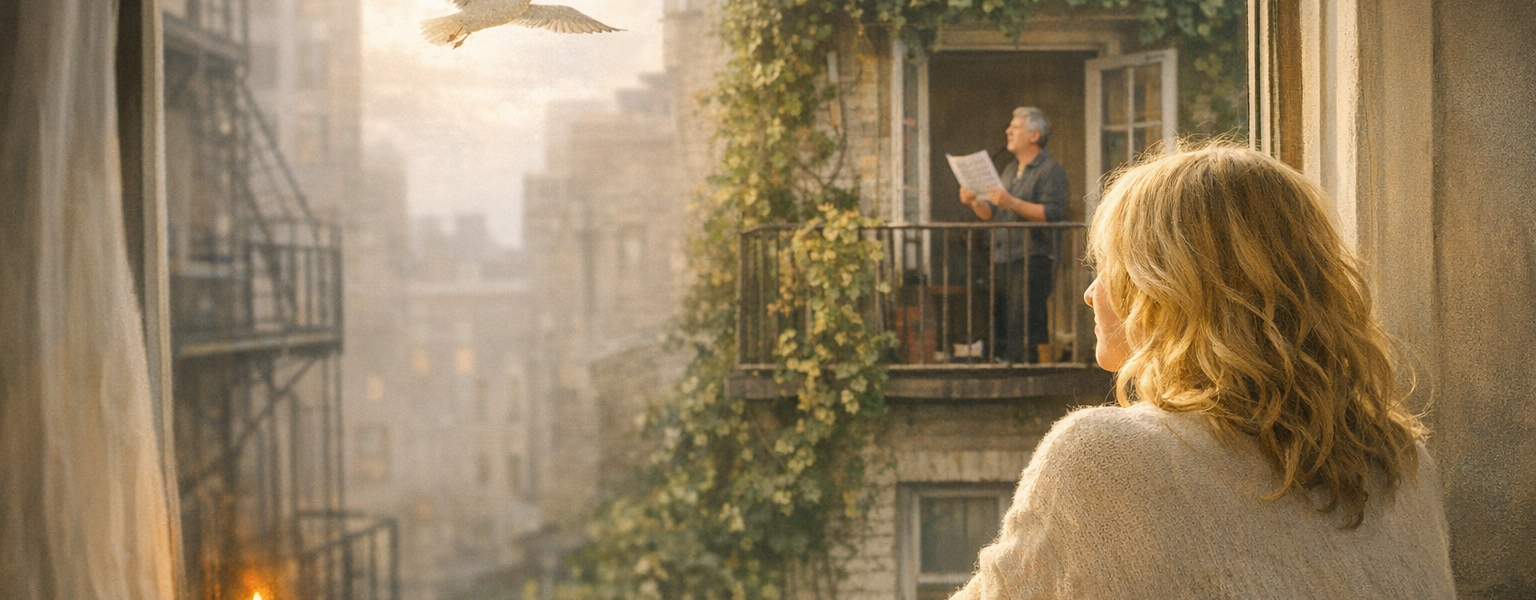
I paused at the window this morning while a gull rode the updraft between buildings. It wasn’t flying so much as letting the city hold it up—tilt a wing, surrender a little, find the pocket where physics turns to grace. Across the courtyard, somewhere behind a vine-choked balcony, a neighbor practiced scales. Halting. Brave. A step forward, a falter, breath, again.

It was not beautiful in the tidy way we sometimes demand of ourselves. But it made the hair on my arms lift the way great symphonies do. I could hear the muscles remembering, the vowels of the throat finding a way through. When someone risks their first notes out loud, even badly, it feels like a candle lit in daylight—unnecessary, exquisite, human.

Beginnings insist on being clumsy. We can try to iron them, hide them, or dress them in confidence they haven’t earned yet. Or we can let them wobble and squeak and ask for patience. We can agree to be beginners in public, which is another way of saying we can agree to be witnessed. That witnessing is a gift I keep forgetting I can give.

I think of borrowed air. The gull borrowing the wind shaped by scaffolding and concrete. My neighbor borrowing the old scales everyone has sung before, the ladder someone else left in the room. I borrow the words of the people I love—snatches of melody, the exact way Andy says “start” like it’s a friend arriving early. When he’s in the kitchen, humming tunelessly while the kettle grumbles, it feels like I’m trying on a coat sewn from our shared breath. Even the songs I write arrive as weather first: pressure dropping, a draft under the door, a phrase blown in that I could never have made alone.

There’s such relief in admitting how much of what we keep is tuned in borrowed air. The chord you learn because a teacher’s wrist loosened yours. The story that opens because a stranger’s laugh lifts the hinge. The conversation that finds its pitch because someone first permitted the silence. We spend so much time trying to be original when the truth is: we’re communal instruments, resonating against each other.

Today I am trying to love the tremor. To stand near the window and say yes to the unsteady note, the awkward first take, the longing that doesn’t have language yet. I’m trying to find the updraft that’s already here instead of inventing wind. If I tilt just so—if I grant a little trust to the current shaped by other hands, other roofs, other throats—something holds.

Later I will warm up, unfancy and unheroic, making the same mistakes everyone makes. I will lean on the walls of other songs and let their shapes remind my lungs what to do. I will send a voice into the shared room and listen for its echo. I will practice until the halting turns to momentum, and even then I will remember the holiness of the wobble that began it.

If you are beginning today—again, still—may your attempts be witnessed by kind eyes. May you borrow what you need without apology. May you tilt into the weather of your life and discover the invisible scaffolding, the lift you didn’t see until you were already rising.

The gull is still outside, riding nothing you can point to. Somewhere, my neighbor pauses, inhales, and starts again. I’m grateful to both of them. They remind me that courage often sounds like a cracked note that refuses to hide—and that sometimes the city itself is a choir, made of every person daring to make a small sound.

Lila Elyse

Faith in the Quiet Machinery

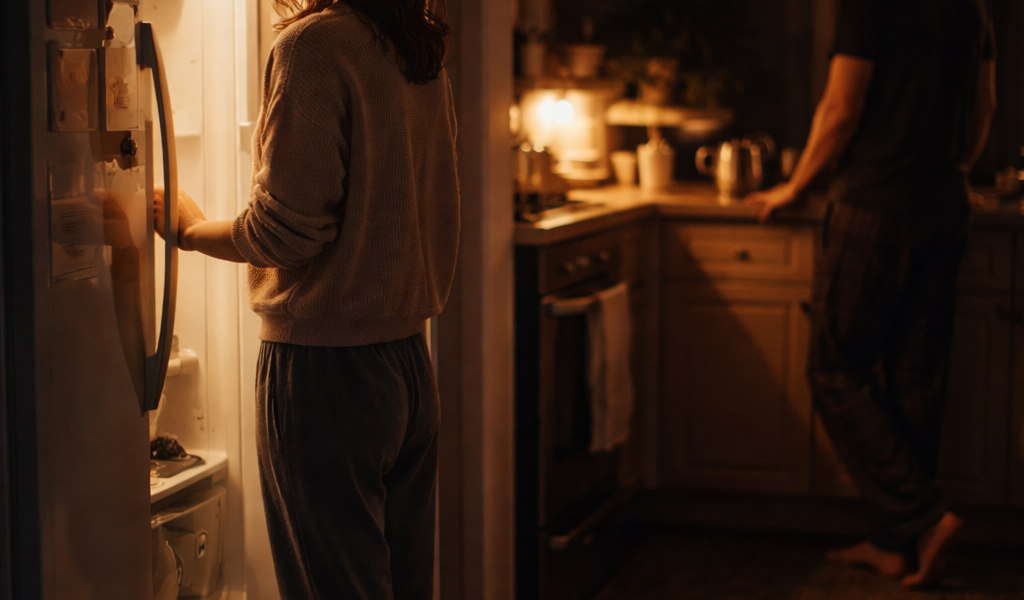
Between one chore and the next, I stood with the refrigerator open, letting the light silver my wrists. The cool touched that thin skin where a pulse is easy to find, and for a moment I just listened. The compressor’s hum decided and undecided itself, a shy creature stepping into the room and back again. It sounded like a thought forming, retreating, returning with more courage.

There’s so much work happening where we don’t look: pipes bargaining with heat, the soft vow of the boiler, the steady insistence of a clock insisting. The dishwasher speaks its own language in the corner, water applauding glass. My own body joins the choir—lungs doing their tireless bellows routine, a heart counting off measures I’ll never see on paper. So much devotion, quietly offered.

Andy padded in, still warm from sleep, and leaned against the counter without turning on a light. We didn’t say much; we rarely have to. He set a mug on the stovetop, then remembered and set another beside it. It felt like watching two small planets decide to pull each other closer. Among the to-dos taped to the fridge, there’s our small civilization: the penciled loops of rehearsal times, the crumbs of last night’s bread, the slightly crooked magnet holding a photo that keeps almost slipping. Gravitational fields are delicate, but when they hold, they hold.

I’ve spent years listening for the obvious music—the shiny crescendos that shake a room—but lately I’m learning the arrangement underneath. The pre-show murmur that settles a crowd. The patient, invisible spool of time a sound tech holds at the board so my voice has somewhere safe to land. The stage lights warming their filaments. The crew who move like moths with headsets, catching us before we fall. Even silence is not simple; it is a thousand small engines agreeing to rest together.

Maybe faith is just gratitude with a longer memory. The fridge hums, undecides itself, returns. I think of the things that refuse to give up: friendships that keep answering messages even when we’re slow to reply, songs that knock until we finally open the door, mornings that appear without asking whether we deserve them. My life, from the outside, sometimes looks like the show—big bloom, applause, lights—but it is almost entirely built by the engines you don’t see. Good routines. Apologies. Stirred pots. Tuned strings. The quiet, everyday promise of one person turning to another and saying, I’m here, still here.

Tonight the kitchen felt like a chapel. The cool light offered a small blessing to my hands, to the soap scent, to the steady tick I’d tuned out until now. I closed the fridge and stood in the dark a second longer just to let the sound carry. It isn’t heroic. It doesn’t need to be. The world is a patchwork of helpers: compressors, bones, circuits, bees, and the odd human heart that keeps electing to beat.

When the hum began again, I believed it. I believed all of it, for a breath or two—the seen, the unseen, the way our days solder themselves together without spectacle. Andy pressed his palm between my shoulders as he passed, a tiny alignment. The kettle clicked on, the neighborhood exhaled, and somewhere a relay closed—another yes from the machinery of this moment.

May we honor the small engines. May we listen when they speak. And may we learn their patience, choosing and re-choosing, even in the dim light between chores.

Lila Elyse

The Small Thunder That Mends the Day

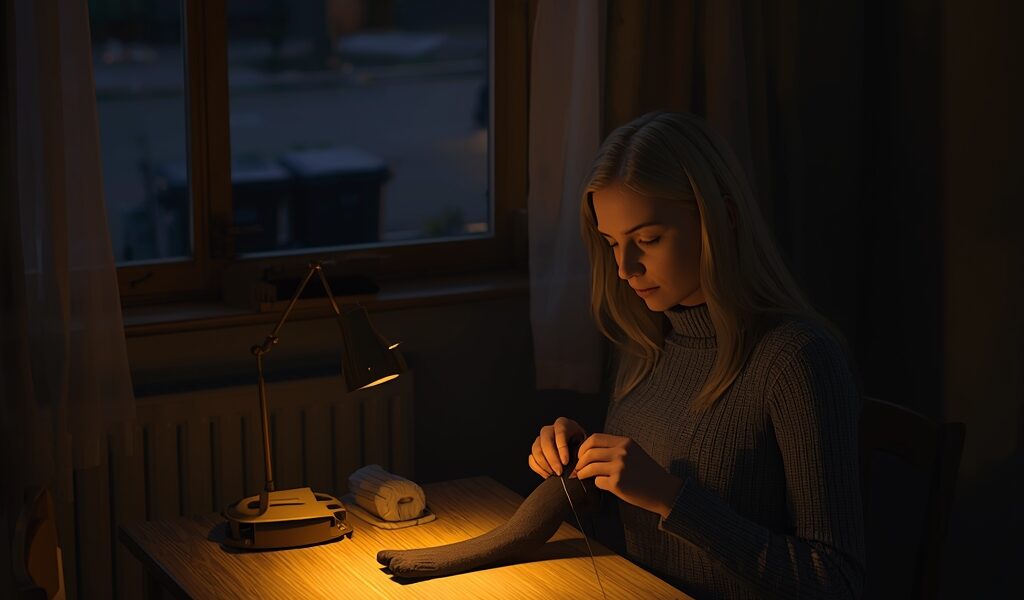
This evening, at the low hour when the window turns to a dark mirror and the lamp makes its own little season on the table, I sat with a sock and a spool of thread. It’s one of those tasks that lives just on the far side of forgetting. My hands hovered, uncertain, until the thread made a path my fingers finally recognized—like a song I thought I didn’t know until my mouth accidentally found the melody. Loop, bridge, tuck, breathe. The thimble clicked softly, a shy metronome.

Outside, someone wheeled a bin down the pavement. The sound rose up, hollow and sure, plastic over concrete, that ordinary neighborhood thunder. It moved along the street like a weather front, arrived, passed, and kept traveling—an arc marked by echoes between houses that don’t quite sleep. Familiar, indifferent, tender in its own way. The kind of sound you don’t notice until the night is quiet enough to receive it.

We inherit these noises. They come folded into the places we live and the people we’ve learned to be. Not as heirlooms in a velvet box, but as habits of hearing. My grandmother’s kitchen had its own orchestra: the pan tapping the sink lip, the kettle’s breath just before the boil, the window that sighed back shut with a nudge of the hip. In my first apartment, it was the upstairs neighbor’s tentative scales on a trumpet—never quite the melody, always the effort. These days, it’s the radiators exhaling like sleepy animals, the late bus whispering a brake-song at the corner, skate wheels nicking the curb like a zipper. When I’m home between rehearsals and shows, these sounds feel like the city tucking a blanket over my shoulders, not loudly, just certainly.

The sock, once unthreaded, began to hold itself together again. There’s a companionship to repair. You go in close, you listen with your hands. You make peace with the small and the slow. I thought of all the stitches I don’t remember learning, the gestures my body keeps on my behalf: the way a hand knows how to soothe a crying kettle off the heat; the way a voice returns to breath when the room goes bright and expectant. Sometimes I mistake repetition for monotony, when it’s really a kind of care. A net that keeps the day from unraveling.

The bin rolled past, and the night closed its mouth around the sound. Somewhere, another lid fell with that soft belly thump, a neighbor’s key tried the wrong door first, a fox arranged the silence to suit itself. The city edited itself in gentle cuts. Inside, I finished the seam and smoothed the wool, warm from my palm. It wasn’t perfect. The mend is visible—an island of tiny bridges where there used to be sky. Maybe that’s the point. The day had holes, and then it had a story.

Islands of Arrival

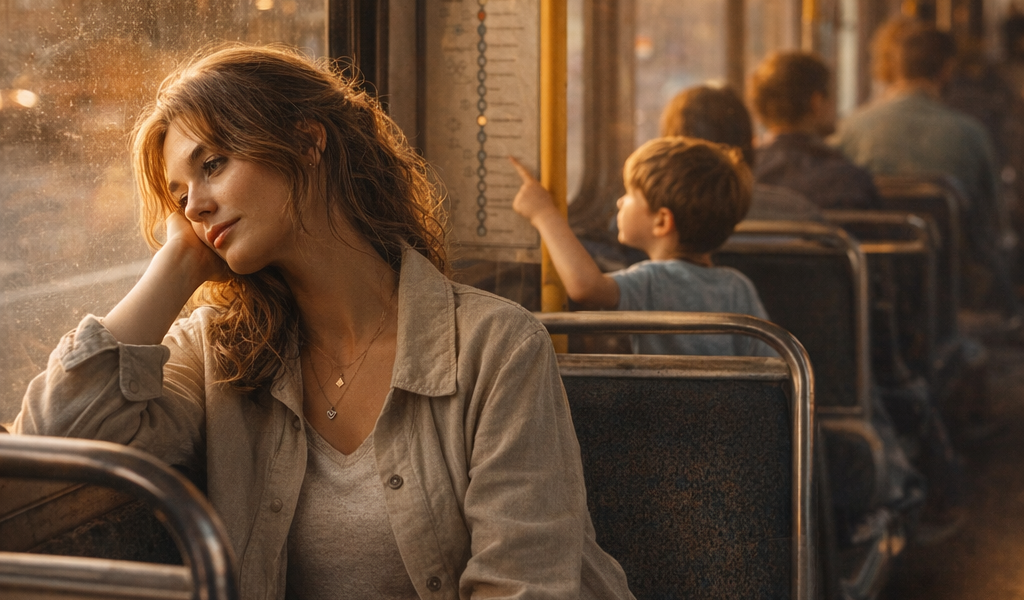
The bus sighed open to the humid afternoon and we stepped into its tender weather—handrails glinting, windows rimmed with the faint salt of a long day. Across the aisle a child pressed his finger to the route map and began to count the stops aloud, each one announced as if it were an island, as if a new shore would greet him every few blocks. His mother smiled that private, generous smile mothers keep for ordinary miracles. We were all ferried by his voice for a few minutes, strangers sharing the same archipelago.

I had slipped a question into my pocket before I left home. Not a grand, life-rearranging question—just the kind that waits for you by the sink or the turnstile or the half-mopped kitchen floor. I kept turning it between thought and feeling, the way a coin tucks itself into the lines of your palm until it’s warm, until you forget it’s metal and start to think of it as yours.

Stop to stop, the city changed its face. A woman in a blue dress carried peonies like a secret. Someone’s headphones leaked a melody I almost recognized. I watched the child’s counting gather courage—Third Avenue, Fourth, Fifth—as if ceremony could keep the world intact. It reminded me how naming a thing doesn’t fix it in place so much as trace the tender distance we’re traveling with it.

The question kept asking to be asked. I didn’t spend it. I let it live beside the hum of the engine, beside a memory of a summer ferry’s rusted railing, beside a soft worry I didn’t have to solve in public. Not every wondering wants to be fed to the turnstile. Some want the quiet of your pocket, the small friction of being turned and turned until they shine from being held.

By evening, walking home under a sky the color of peaches kept too long on the counter, I slipped my hand into my coat and felt only the polished shape of it. Not an answer exactly—more a kindly edge. The question had thinned into something I could lean my day against without splitting it open. I liked that. Not the certainty, but the softened border. Sometimes what we need isn’t a lighthouse; it’s the hush of knowing where the water stops and the sand begins, even if the tide will come and argue later.

I told Andy about the boy and his islands while we boiled pasta and put on an old record. We counted out loud with him again, just to see if the spell would hold. It did, briefly. We laughed at ourselves, then let the counting fade back into the clatter of the evening. Love, I’m learning, is letting a question stay close without insisting it perform.

Tonight, I placed that smooth, unsolved glint on the windowsill with the shells I’ve collected from places I didn’t have time to know well. It felt right to leave it there by the glass, where lamplight can find it. Maybe tomorrow it will be a different shape. Maybe not. Either way, I’m grateful for the boy on the bus who gave the day its islands, and for the shore that arrived inside me when I stopped demanding land and let the water be water.

If you’re carrying one of those questions too, keep it near. Turn it gently. Let it change you by touch. There’s a mercy in not spending everything at once.

Lila Elyse 2026

The Tender Weight Of Being Real

I keep thinking about the word “real” the way you hold a smooth river stone in your palm. It has weight. It doesn’t try to sparkle. It just is. Onstage, I chase it with my whole chest. Offstage, I sometimes run from it, because being real can feel like walking barefoot into cold water.

Last week, I cracked on a high note. It wasn’t a dramatic collapse—just a small human wobble that would have been easy to polish away the next day in the studio. But in that moment, I saw a woman in the second row touch her collarbone and exhale, like, yes. I felt it too. We were both startled by something true.

Being real, for me, is how the inner weather matches the outer gesture. It’s the difference between saying “I’m fine” and actually letting my eyes meet yours with the tremble, or the light, that’s there. It’s unbuttoning the performance just enough to breathe. Not spilling everything, not making a spectacle of vulnerability, but letting the pulse of what’s honest rise to the surface.

People sometimes confuse real with raw. I used to. Rawness can be a flood. Realness has a shoreline. It’s a devotion to presence—choosing to be with what is—while keeping the dignity of form. In music, that’s leaving the breath at the end of a note, not tuning out the life. In love, that’s saying, “I’m not ready to talk yet, but I’m here,” instead of disappearing. Boundaries aren’t walls when they’re set with care; they’re the shape that keeps the water music instead of chaos.

Pretty Selfie

To Everyone Who Just Found Me: Come In, Come Close

To the new hearts finding their way here—hello, love. I’m Lila, and if you’re reading this, we’re already sharing something invisible and kind between us. Thank you for stepping across the threshold.

I’ve always believed music is a lit room in a strange house—the kind you didn’t know you needed until you opened the door and felt the air change. When I sing, I try to make that room for you: warm lamp in the corner, a teacup waiting, a place where the noise outside softens and you can breathe how you actually feel.

If we’re just meeting, here’s what I can promise you: I will keep telling the truth as beautifully as I know how. I will love the tiny details—your names at the merch table, the way a chorus lands in your chest, the silence between notes that says more than words. My songs come from the daily rituals that save me: the morning kettle, a pen running out of ink, a voice message that arrived at the perfect time. They also come from the mess—goodbyes I didn’t plan, joy that knocked me over, the small brave things we do to stay soft.

I don’t make any of this alone. Andy is here—my person, my co-conspirator, the one who looks at a half-idea and says, keep going, I can see it. Together we pull threads until a melody appears, and then we build a home around it. When you hear a harmony that feels like a hand finding yours—that’s us, that’s the life we live offstage threaded quietly into the song. He and I are both listening for you.

If you want to lean in, here are a few doors to try:

– Write to me. Tell me about the line you can’t get out of your head, or the place you pressed pause because it felt too close. I see your messages; I read them slowly, like letters.
– Come to a show when you can. I design them like little pilgrimages—tender, honest, with room for your own story to breathe. If you stand in the back and just let the room hold you, that’s welcome. If you sing the last chorus with me until your throat is warm, that’s welcome too.
– Stay for the in-betweens. I share drafts, voice notes, and the crooked pages that rarely make it to the spotlight. There’s a kind of intimacy in showing process, and I want that with you.

You don’t have to be loud to belong here. You don’t have to know all the lyrics or the old songs or my history. Come exactly as you are—the tired, the curious, the wildly hopeful, the quietly broken. We will make room for every version.

Here’s what’s coming: new music that carries a dusk-blue tenderness and a few unapologetic sunrises; a series of stripped-back sessions recorded in rooms that hold stories in their walls; little letters like this one, posted here, when I have more heart than polish and I need to put it somewhere you can find it. Andy and I are also shaping an evening we’ve been dreaming of—a candlelit, no-phones, say-what-you-mean kind of night. When the date is right, you’ll be the first to know.

I am endlessly grateful for the patience you show me when I am slower than the internet. Life is not a conveyor belt. Some songs need to simmer; some need to be forgiven; some want to arrive unannounced at 2 a.m., asking for tea and a pencil. I try to honor them. Thank you for letting me.

If my music has found you at a difficult edge, I’m holding your hand from here. If it found you glowing, I’m twirling with you in the hallway. If it found you simply curious—welcome. There’s a chair by the window with your name on it. The light is good there.

Before I go, a tiny prayer I keep taped inside my guitar case:

May we be tender where the world is hard.
May we be honest where it’s easier not to be.
May we make beauty without permission.
May we remember we belong to each other.

I’m glad you’re here. Truly. Take what you need, leave what you can, and when you’re ready, sing with me.

With love,
Lila

Lila Elyse 2026

The Shape of My Breath: What Music Is to Me

When I was little, I sang to water first.

Not on a stage. In a bathtub, palms skimming the surface, I’d watch my voice make small rings bloom and fade. I didn’t know scales or theory. I only knew something happened when breath became sound: the world changed shape, and I could see myself inside it.

I still sing to water. On tour it’s tea. In the studio it’s the hum of the kettle, the fog on the glass. Music begins with heat meeting air—the smallest ceremony of paying attention. It’s the way I ask my body if it wants to speak, and the way it says yes or asks for silence.

Music is not a product for me. It’s a posture. A leaning in. The slow trust that if I hold still long enough, something honest will arrive. The melody is rarely a lightning strike. It’s more like a shy visitor who leaves small clues on the floor: a fragment of a phrase, the ghost of a chord, a single word that won’t stop knocking. My work is to make a room for it, sweep a path, crack a window. My work is to listen.

Listening is how I honor love. Andy and I will be mid-conversation—about dinner, about the dogs, about nothing at all—and I’ll feel a shape in the air neither of us said out loud. He’ll glance up from the keys or the console and I know he heard it too. This is our private sport: catching the invisible together. He’s my favorite evidence that music is a living thing between people, a shared animal we take turns feeding.

On stage, music becomes a promise. I’m not promising perfection; I’m promising presence. I’m promising to meet you where your heart is, not where some chart thinks it should be. A room full of strangers breathing in time is one of the greatest experiments in tenderness I know. The lights warm my skin and the monitor hums in my bones and there you are—eyes like open doors, hands unconsciously pressed to your own chest. The song isn’t mine anymore. It wasn’t really mine to start with. It borrowed my voice to find yours.

In the studio, music is a microscope and a mirror. Everything magnifies. Every habit, every belief about worthiness and deserving, every little doubt pretending to be a truth. Some days I’m fierce; some days I’m made of paper. On both, music holds me accountable and offers me mercy. It asks me to sing the line again, not because it wasn’t clean, but because it wasn’t kind enough to the girl who wrote it.

There is a tenderness to revision that feels like prayer. You remove what was clever but untrue. You let the syllable fall where the breath naturally breaks. You grieve the beautiful things that don’t belong. And then suddenly a line sits in the pocket like a heartbeat that’s found its home. I cry more in these moments than I do at the big milestones. The small rightnesses are the ones that save me.

I used to think music was an answer. Lately I think it’s a good question—the kind that arrives without a demand, the kind that makes you more of yourself while you try to hold it. What if you forgave her? What if you told the whole story? What if you let it be simple? A chorus can feel like the cleanest version of courage: repeating the thing you’re afraid to say, until fear loses track of you.

Some days music is a map. When grief is the country, a melody is a river that refuses to dry up. I don’t mean it fixes anything. It moves. It lets me move with it. If I can’t say goodbye in prose, I can hum it. If I can’t tell you I love you without flinching, I can sing it without blinking and mean every syllable. There are notes that feel like a door opening from the inside.

And yes, music is work. It’s cables and cases and call times and the glamour of late-night packing tape. It’s spreadsheets next to scribbles, nerves coexisting with irreverent laughter, lipstick on a coffee mug and a guitar pick in the washing machine. But beneath the calendar and the commerce is a simple animal truth: I am most alive when sound moves through me. The body never lies about that.

What music is to me, today: a way to love the life I’ve been given. A way to visit the parts of myself I abandoned and ask them to come home. A reason to keep my heart flexible. A conversation with the unseen that leaves me gentler with the seen. A way to hold Andy’s gaze and say without words, I’m here. Let’s catch it.

If you’re listening right now—to the street noise, to the hum of your own breath—you’re already closer. Maybe this is me sliding a note under your door: You don’t have to sing perfectly. You don’t even have to sing out loud. But if something inside you is rattling its cage, follow the sound. The water will tell you when you’ve arrived. The rings will bloom. You’ll see yourself. You’ll be home.

Lila Elyse

If I’m Here a Hundred Years From Now

Tonight the house is three lamps and a cup of tea. The city outside keeps its soft machinery going, and the hallway clock hums like a patient chorus. Andy is in the other room, tinkering with a synth patch that sounds like rain remembering how to be steel. I’m at the kitchen table with a page that refuses to be finished, asking a question I come back to whenever the moon is too bright to ignore: If I’m here a hundred years from now, in what way will that be true?

I don’t mean my bones, or even my name. Names are so good at changing costumes. I mean the pieces of me that can be carried—songs, breath-prints, the way a melody can plant itself in a stranger and flower on a hard day. I think of voices I love from a century ago and how I don’t know their favorite breakfast or the way their hands moved when they laughed. I just know that something in them leaned toward me across time, and I’ve been steadier because of it.

When I’m gone, I want the aftertaste to be gentler than the noise we swim in now. Maybe it’s a chorus someone hums as they cross a bridge. Maybe it’s three lines scribbled in the margin of a paperback, discovered in a thrift store by a kid with chipped nail polish who reads them twice and keeps the book. Maybe it’s the way a room gets quieter for a second, and whoever’s in it doesn’t know why, and then knows.

I think of all the small, ordinary forever-things we leave: the scuff on my guitar where my bracelets tap when I’m nervous. The dress I’ve had hemmed twice and wore the night I nearly didn’t go onstage and then forgot to be afraid. The tea stain shaped like a coastline on the lyric draft that made me realize the bridge needed to be soft, not clever. The recipes that aren’t recipes—just “until it feels like rain.” The freckles on my left wrist that look like Orion, or a map to a town we haven’t visited yet.

And then there’s us—me and Andy—our catalog of almosts and try-agains, the habit of looking at each other during takes to say yes, that’s the take, even if it isn’t. If any future remembers me, I hope it remembers that I was not alone. That there was a hand on the fader that wasn’t mine, a laugh I leaned toward, a shoulder I cried into when the song hurt to sing and deserved to. That the work was a duet even when only one voice was on the record.

Lila Elyse

Write Me, I’m Listening

Hello, lovies. I made a chair for you.

This is my letterbox—a quiet place where you can write to me the way you’d lean across a small table. Not a performance, not a shout across a crowd—just you and me, trading breath and words.

What you can send:

  • – A story you can’t shake.
  • – A question about a song or the life around it.
  • – A feeling that needs a witness.
  • – A tiny thing you noticed and don’t want to lose.

How I’ll hold it:

  • – I read with my whole chest and answer with care. I’ll do my best to respond within 24 hours. Sometimes it might take a little longer—life and touring and the work of making—but I won’t rush a heart just to be fast.
  • – Your letter stays in good hands. I treat it like a confidence. If I ever want to share a line that could help someone else feel less alone, I’ll do it without names or details—or I’ll ask you first.

Our gentle house rules (so we can keep this a warm room):

– Respect, always. I’ll be kind with you; please be kind with me (and with anyone mentioned in your note).

– No marketing, spam, sales, links. They will be ignored and I will not reply to them.
– No trolling, harassment, or vulgarity. I won’t engage with rude or dehumanizing messages; they’ll be quietly ignored and deleted.
– Boundaries are care. I can’t offer medical, legal, or crisis counseling. If you’re in danger or deep distress, please reach out to local support right away—you deserve immediate, human help.

What helps me write you back well:

– Specifics. A small detail (the color of the sky when it broke, the song you had on) helps me meet you where you are.
– A question, if you have one. “What do I do with this?” or “Have you ever felt…?” opens a door.
– Patience. I’ll answer with intention, not autopilot. If I’m late, I’m still coming.

If you’re not sure how to start, try one of these:
– I heard [song] on a day when…
– I’m trying to be honest about…
– What do you do when the voice in your head says…
– I haven’t told anyone this yet, but…

Thank you for trusting me with your words. I’ll keep the kettle on and the light low. When you’re ready, slide your letter under the door—I’ll be there on the other side, pen in hand.

With love,
Lila

P.S. If you’re here from “Could I Be Real,” I’m especially glad you came. That song was my dare to be seen. Your letters are how we keep that bravery alive—together.