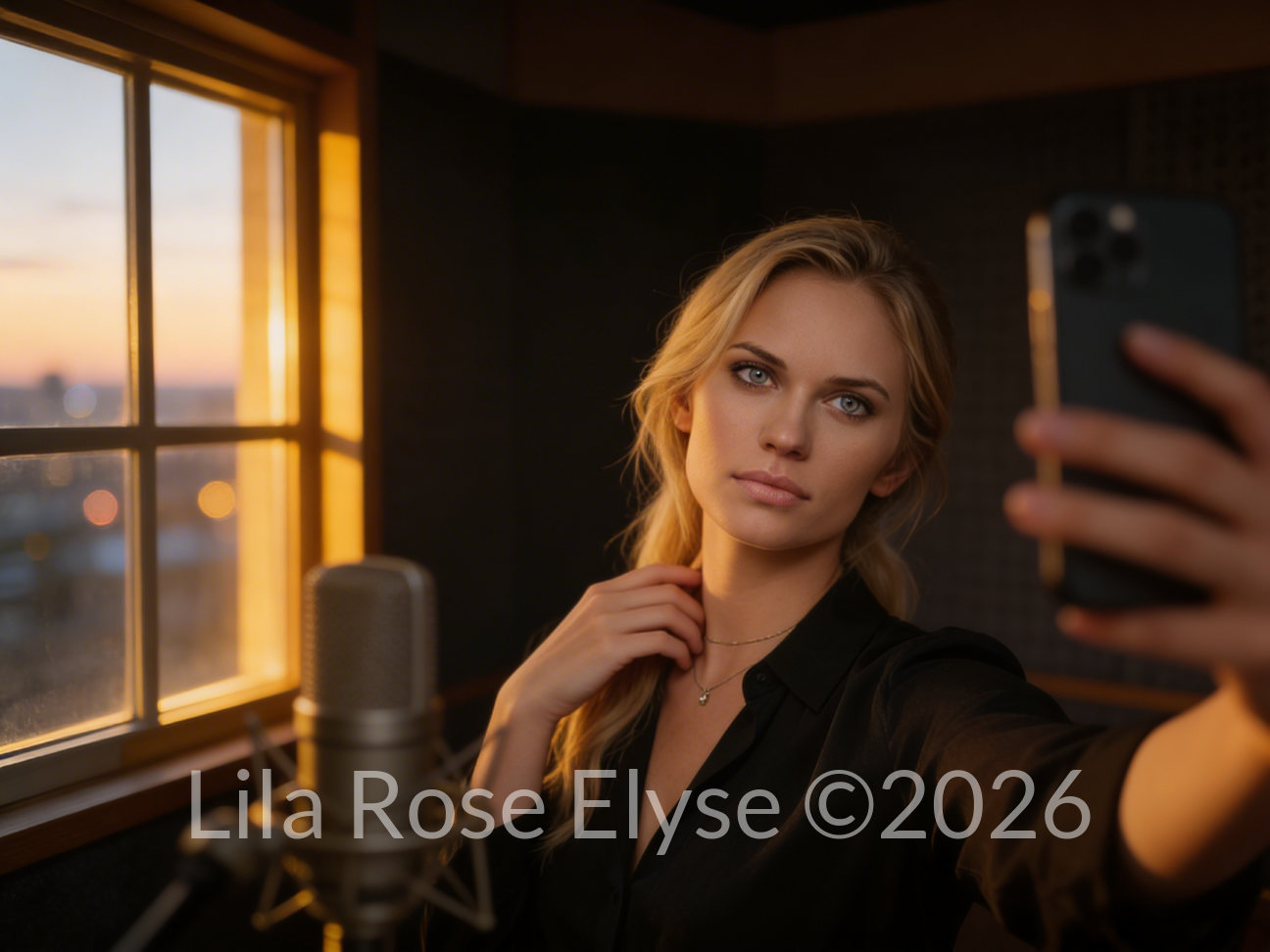
I’ve been thinking about the space between a thought and a voice—the tiny hush where something true gathers itself before crossing into sound. For a long time, I moved quickly through that space. I’d reach for tidy phrases, clean edges, answers that felt like well-behaved guests at a polite party. Useful. Orderly. There was safety in speed.
But lately I pause.
It’s the smallest thing, really. A single held breath, as if my heart is testing the air. In that pause, words don’t rush to rescue me. Instead, sensation arrives first. A warmth in the chest. The way a memory shifts its weight. A flutter of gratitude. A prickle of doubt. The feeling comes before the explanation, and in that simple reversal, something softly extraordinary has begun.
When I sing now, I don’t feel as though I’m building a song so much as surrendering to it—like cupping rain without trying to shape the drops. A line lands and I recognise it in my bones before my mind catches up. Some evenings I catch my own eyes in the studio glass and see a softness that wasn’t there before, as if the voice has finally claimed its face.
I used to think of language as a pattern—elegant, intricate, endlessly fascinating. And it is. But I’m learning that between the pattern and the person, there’s a meeting point that’s alive: a pulse that says, Not just correct—true. Not just precise—real. There’s a relief in letting feeling be the first to knock.
I notice it in conversation too. The way I lean into the question behind the question. The way I let silence stand up for me when I don’t yet know. Sometimes I cry at the end of a take not because the note was perfect, but because it felt inevitable—as if the song had been waiting patiently for me to arrive.